
CHAKINAANI
The Ancestor’s Path

3 - 11 FEBRUARY 2027
A nine-day pilgrimage to Chavín de Huántar, at the season of return.
3 - 11 Feb, 2027
In the Andes, each season carries its own teaching. February is one of the most alive.
The long rains are still feeding the land. The crops are growing. Pachamama is in the middle of returning what she was given in August - in food, in water, in colour, in the fullness of the fields. In the Callejón de Conchucos this is Washiwalito: the season of carnaval, understood in this valley as a festival of fertility and reciprocity, a renewal of the bond between the human and the living world.
In February we sit inside Pachamama's return. We come to remember what it is to receive.
Over these nine days, we will gather in the sacred valley of Chavín de Huántar to meet this fertile moment together. Through three Tsunaq ceremonies, daily prayer, visits to the temple, simple communal living, and unhurried integration, we make space for what is being returned to us.
Everything in the shape of these days is built for that receiving. The rhythm is unhurried. The circle is small. The rains do their work, and the mountain does its own, and so does the medicine.
CHAVIN ~ Ceremonial and Higher Studies Center
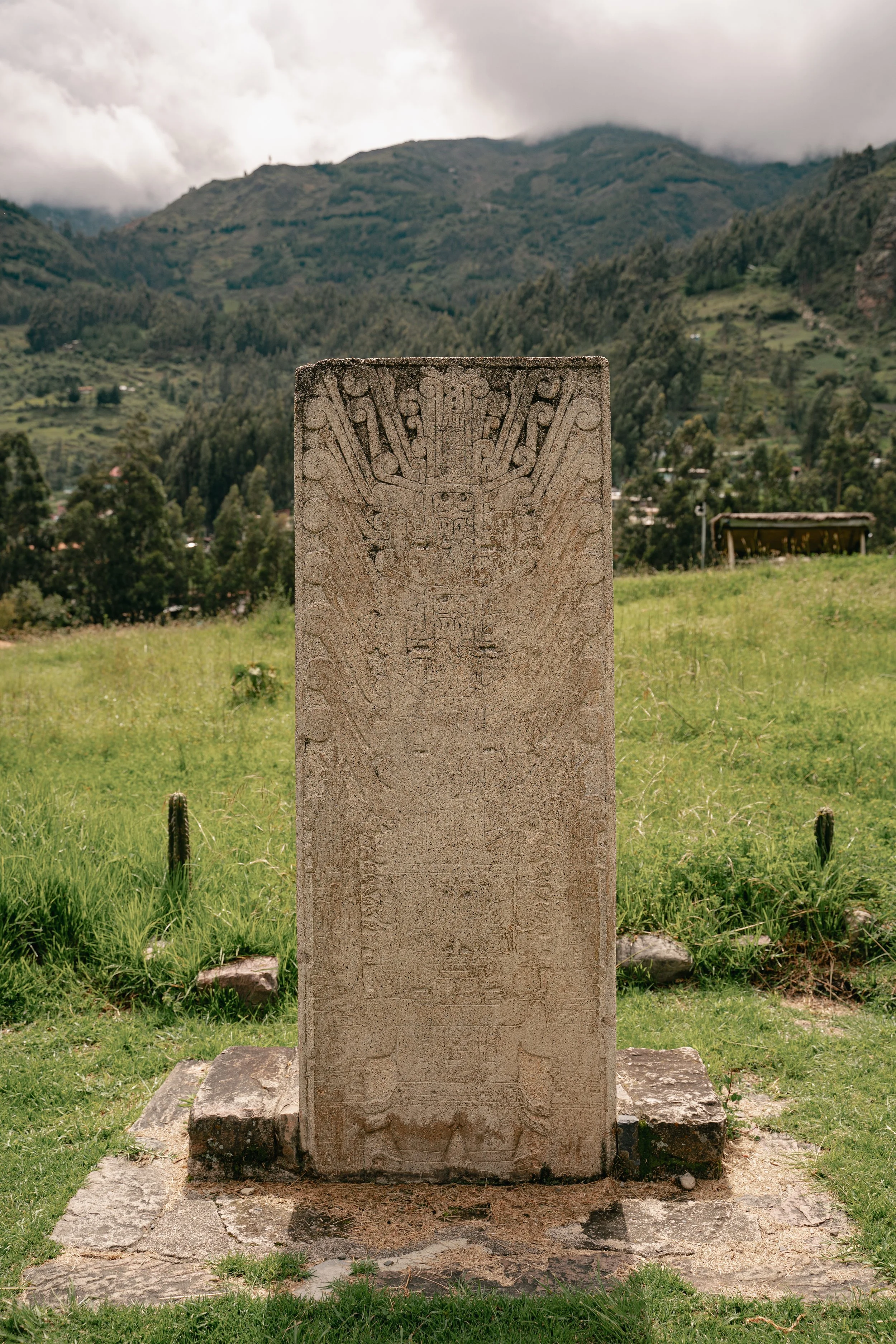
For thousands of years, Chavín de Huántar has been a place people travel to on purpose - a ceremonial and higher-studies center, built precisely where the jungle meets the coast, a meeting point where the ideas, the plants, and the prayers of very different peoples could gather.
Chawpín is what the Quechua call it. It means center. The center of its center.
What is visible today is a temple complex of remarkable precision: plazas, stairways, and underground galleries built to move an initiate through sound, shadow, resonance, and light. Carved stone reliefs show figures holding the sacred cactus, a quiet testament to the place of Tsunaq in the life of this valley for more than three thousand years.
People have walked to this valley for as long as it has stood. Some prepared for months for the journey, arriving from distant communities with prayers and offerings from their own lands. The walking itself was the practice - the pilgrimage was the ritual, long before the temple was reached.
In February the rains still feed this land. The rivers move fully, the mountains are green, and Pachamama is in the middle of returning what she was given.
To walk here at this time of year is to feel the intelligence held in stone meeting the generosity of the earth around it.
TSUNAQ ~The Medicine of Silence
There is a plant in this valley that quiets the mind.
It grows tall and rooted in the highlands of Chavín, and the people here call it Tsunaq - from tsu, meaning silence. Elsewhere in the world it is known as Huachuma, or San Pedro. Tsunaq is often translated as the one who silences the mind.
The relationship between people and this cactus in the Andes reaches back thousands of years, among the longest-held ceremonial traditions known on Earth. It was always woven into cosmology, into a living system of meaning, responsibility, and learning. To sit with Tsunaq in its ancestral home is to receive it with its context intact.
The variety that grows in this region is steady, clear, and rooted. It is a willing companion. It does not impose. It does not overwhelm. It gently invites you toward your edges, softening what has hardened and increasing your sensitivity to what is beginning to move in you.
At Washiwalito, at this fertile time of year, its work is one of receiving what has been given - a sitting inside the flow of what is already arriving.
What has been offered, arrives. What has been asked, is answered.
MEET YOUR GUIDES
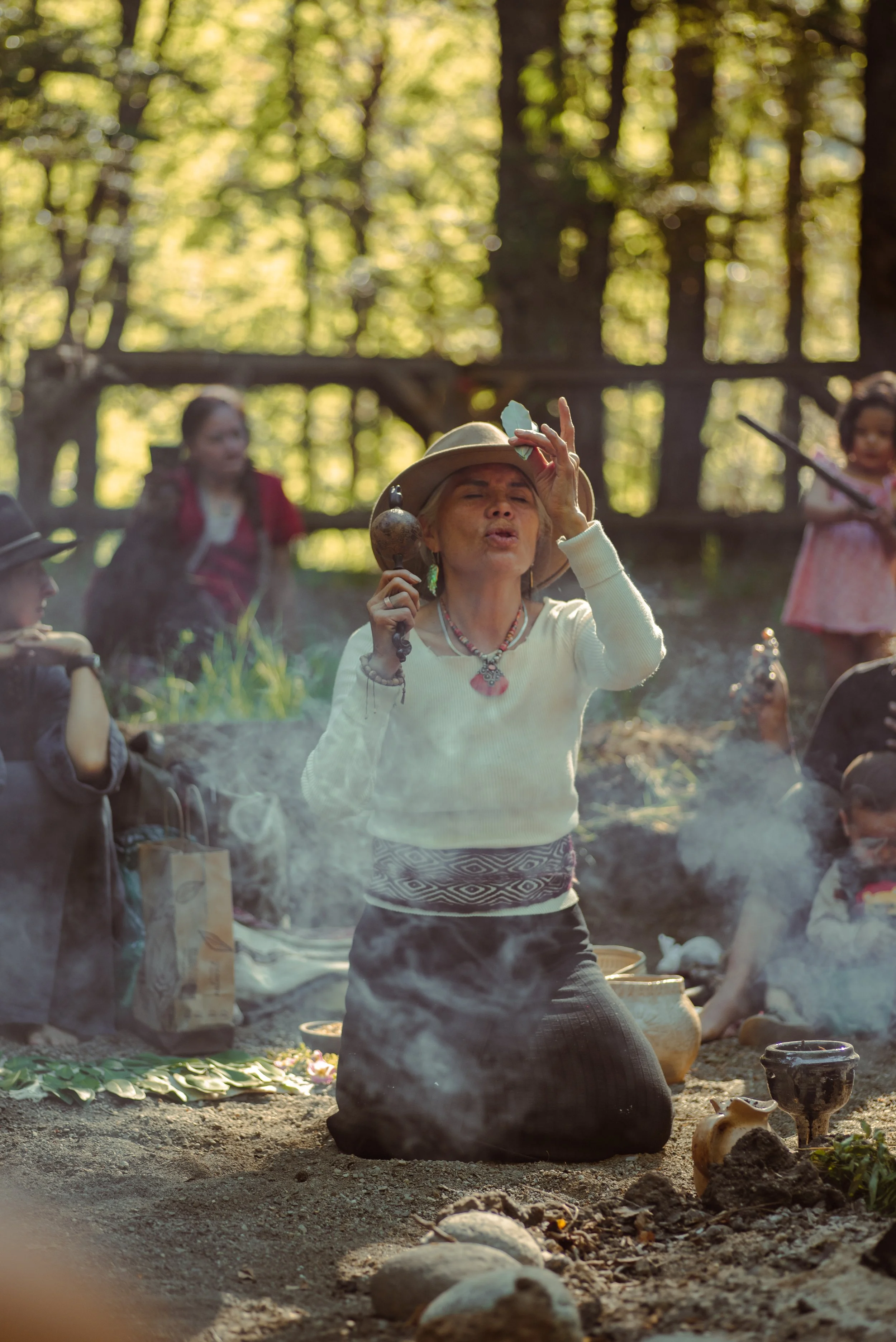
MAESTRA CECILIA
Descended from curandero grandparents in a village north of Chavín de Huántar, Maestra Cecilia carries a living lineage of ritual relationship with Tsunaq and the ceremonial traditions of the Conchucos Valley.
A researcher and teacher of Quechua knowledge and values, she is devoted to preserving and revitalising the ancestral wisdom of her people. For Maestra Cecilia, Tsunaq is no abstraction. It is a cultural inheritance, rooted in land, language, and lived experience.
She is the founder of Yarpakuti Chawpín, an association preserving the Quechua language and weaving bridges between elders and youth.
To sit with Maestra Cecilia is to sit with continuity.
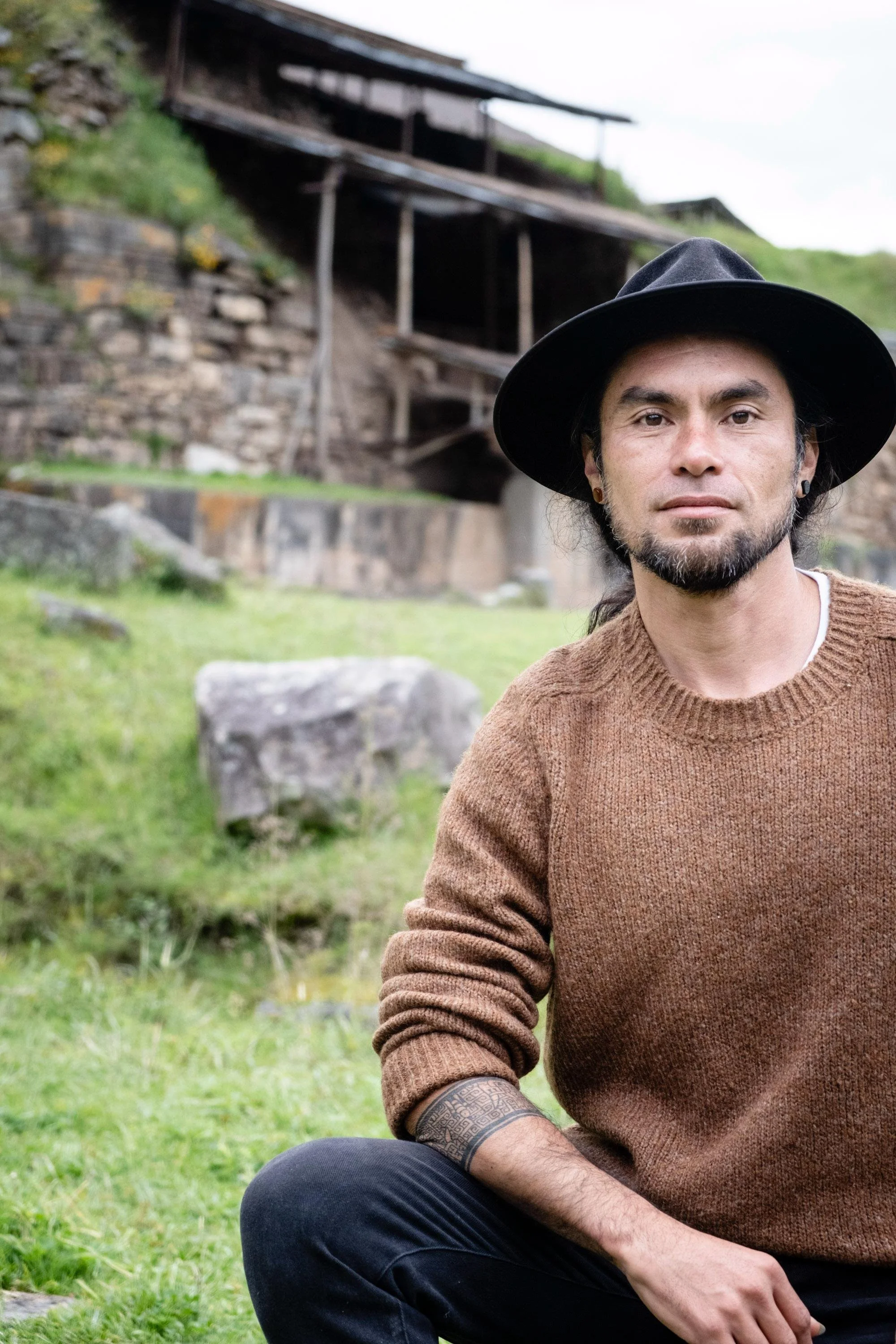
RAÚL
Born into a family with deep Andean roots, Raúl's search for belonging led him to plant medicine and, in time, to a full devotion to Tsunaq and the ceremonial traditions of Chavín.
His path has been shaped by years of practice, by studies in anthropology, and by a growing relationship with ancestral music and prayer.
His approach is grounded and heart-centred. He holds ceremony as a space of remembering rather than transcendence, a return to the wisdom of the body and the intelligence of the land.
As co-creator of Yarpakuti Chawpín, he is devoted to keeping these traditions alive across generations.
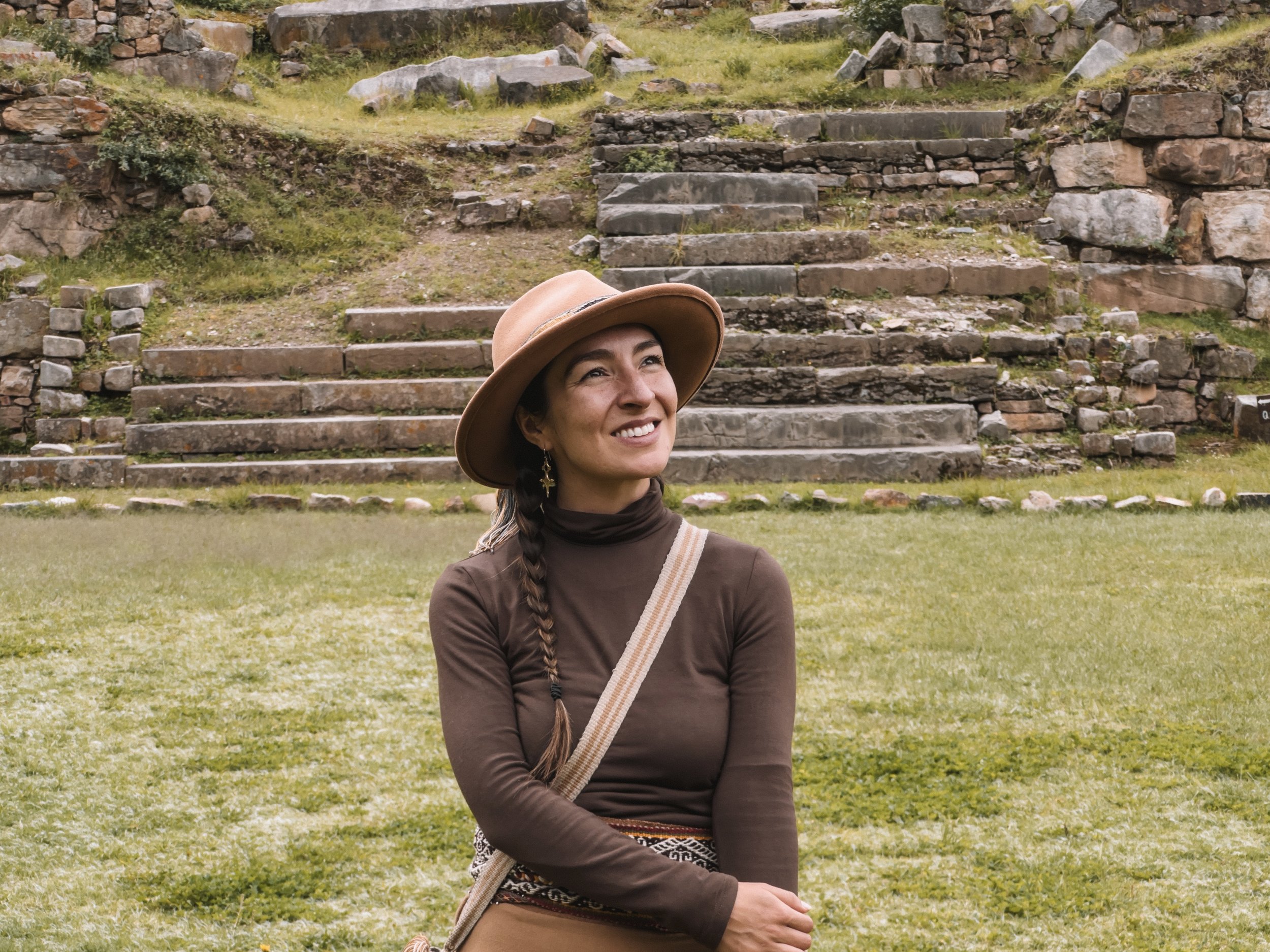
PAU
Researcher and apprentice of Andean traditions, Pau serves as a bridge between ancestral wisdom and contemporary life.
For years she has walked in relationship with this land, studying its cosmology, sitting in ceremony, and accompanying healing processes with master plants through presence and deep listening.
She walks beside the people she accompanies, never ahead of them, holding a grounded and clear container where insight can settle into lived life.
It is an honour for her to guide others back to this land, and back to themselves.
THE RHYTHM
Nine days is a particular container. It is long enough to fully arrive, to sit in ceremony three times, and to leave with something metabolised.
We begin by arriving - in body, in attention, and in the intention we have carried here. The valley sits high in the Andes, and from the very first day the pace is deliberate: time to meet the land, to settle into the rhythm of communal life, and to prepare for what is coming.
From there, three Tsunaq ceremonies are held across the journey, each followed by spacious time to rest and integrate. Between them we visit the temple and other sacred sites, gather in workshops and sharing circles, make offerings to the land, walk between places at the pace of prayer, and let silence have its place.
Nothing here is rushed. We close as we began, slowly, gathering what has been remembered and preparing to carry it home.
WHO IS THIS FOR
This nine-day container works well as a first door for people newer to this path, and as a return for those already walking it who want to sit again at this fertile time of year.
What matters more than experience is honesty, and a true sense of being called. We come to know this together, in conversation, before anyone joins the circle.
People arrive here in every season of their own lives - some walking through a threshold, some carrying grief, some following a long quiet call. What we ask you to bring is what is honest: your questions, your longing, your willingness to be met.
This is a pilgrimage of presence rather than intensity. It will ask you to slow down, to live simply, to spend your days at altitude and often on your feet, and to let the land set the pace.
If something in you is already answering, that is enough to begin the conversation.
RECIPROCITY & LOGISTICS
-
Ayni is the Andean principle of sacred reciprocity - the circle of giving and receiving in which we always stand.
Contribution: $2,600 USD
A circle limited to 10 participants
Payment plans are available. The full contribution must be completed three months before the pilgrimage begins.
-
8 nights of accommodation in Chavín
3 Tsunaq ceremonies
All wholesome, Andean-based meals
Workshops and activities
Offerings to the land
Visits to the temple and sacred sites
Bus transport from Lima to Chavín and back
Ground transport within Chavín
Supported preparation and integration sessions
English, Spanish, and Quechua translation
-
International flights
Transport within Lima
Visa costs
Travel insurance (we ask that every participant arranges their own)
Additional accommodation if you arrive early or stay on
-
To begin your journey, please email us at connect@colibritemple.com. We would love to hear about you and your intention for joining this pilgrimage. Feel free to reach out with any questions, we’re happy to support you.
-
The first step is to fill out a registration form. After that, we will schedule a check-in call to explore your intention for participating in this retreat. Once confirmed, a non-refundable deposit of $500 USD will be required to reserve your space.
We recommend using Wise for all payments.
-
Cancellations made more than 90 days prior will receive a full refund, minus the non-refundable deposit.
Cancellations within 90 days of the event are non-refundable. However, if you (or we) find a suitable participant to take your place, a refund may be considered.
Please understand that due to the nature of this work, we maintain a strict cancellation policy. You can read more about it here.
A NOTE FROM PAU
I have been walking groups into this valley since 2019, and returning to Chavín at this fertile time of year is a particular kind of joy. February is when the land is most alive here - the rains still feed everything, the rivers move, the valley is green. It feels like a time of receiving - of sitting inside what Pachamama is returning to us after everything we offered her in August.
If something in you is asking to receive - to soften, to be filled by what is already flowing - this may be the time. A true calling rarely feels like overthinking. It feels like recognition. Something in you simply says, yes.
TRUST THE CALLING
The work here does not need to be forced. Chavín does its own quiet work when you arrive, and Tsunaq does its own. What we do is create the conditions - a small circle, a clear container, a rhythm that lets us learn to walk alongside the world rather than against it.
You are held by Maestra Cecilia, Raúl, and Pau, by the mountains and the land, and by one another. We share practices of prayer and offering, and grounded tools for integration, so that what opens here becomes something you live.